


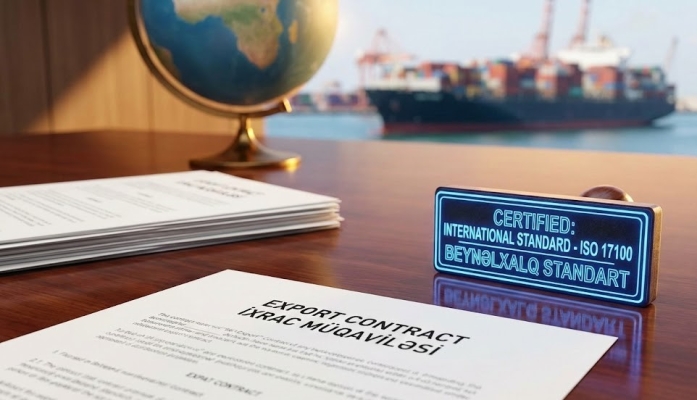
The Key to Export Success: Translating Documents to International Standards
Success in global trade is not limited to manufacturing products and organizing logistics. The accurate translation of export documents in compliance with international standards plays an equally critical role. Even a small terminology error can lead to customs delays, fines, and even the return of goods.
In this article, we explain why export document translation requires special professionalism and how international compliance can be ensured.
Terminology is decisive in international trade. For example, a small mistake in the Safety Data Sheet of a chemical product may result in the cargo being classified as “hazardous” and transportation costs increasing threefold. Likewise, an incorrect translation of an ingredient in a food product may cause the goods to be denied entry at the border.
Risk: Loss of time, financial penalties, reputational damage.
Solution: Adapting terminology in accordance with the legislation of the target country.
Which documents require professional translation?
During export, the following documents definitely require professional and often notarized translation:
- Commercial Invoice: Product description and value.
- Certificate of Origin: Important for tax exemptions.
- Certificates of Conformity: Proof that the product meets standards.
- Technical Passports and Manuals: For consumer safety.
- Contracts: To clearly define the obligations of the parties.
Why does export document translation require special attention?
1. Customs compliance and legal risks
Customs authorities make decisions based on the information in the documents. Incorrect translation of units of measurement, product descriptions, or codes may lead to cargo detention, additional inspections, financial penalties, and export rejection.
2. Terminology accuracy
Incorrect translation of terms such as “net weight,” “gross weight,” “FOB,” “CIF,” and “HS code” leads to financial and logistical misunderstandings. Professional export translation requires these terms to be used in accordance with international trade regulations.
3. Compliance with international standards
Many documents must comply with:
- ISO standards
- World Trade Organization (WTO) regulations
- International Chamber of Commerce (ICC) international trade terms (INCOTERMS)
- European Union requirements
During translation, not only language accuracy but also regulatory compliance must be taken into account.
What does International Standard mean?
Document translation is not just about converting words. Translation in accordance with international standards (for example, ISO 17100) includes the following:
- Preservation of formatting
- Units of measurement
- Expansion of abbreviations
What processes are applied in professional export translation?
High-quality export document translation includes the following stages:
- Subject-matter specialized translator
- Terminology verification
- Second-stage editing
- Preservation of format and structure
- Compliance control
- Final quality check
This approach minimizes risks.
Language barriers should not be the weakest point in your global market entry strategy. Proper translation of export documents is an investment in your business security. As CETA Translation Company, we support exporters with our team specialized in terminology and familiar with customs procedures.
We do not simply translate — we ensure that your product is accepted anywhere in the world.
Are you looking for professional, international-standard-compliant translation for your export documents? Then contact us.