


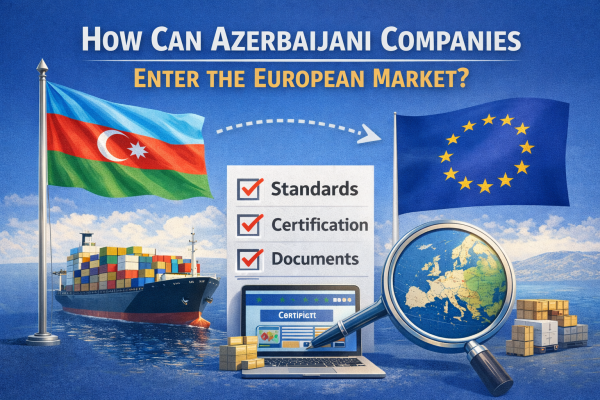
Although the European market offers great opportunities for Azerbaijani companies, entering this market is not just about shipping products, it also requires thorough preparation and compliance with international standards. At a time when the development of the non-oil sector has become a national priority, market entry is no longer limited to export alone; standards, compliance, communication, and documentation play a decisive role.
In this article, we explain the key steps for entering the European market and what companies should pay attention to.
1. Market Research and Target Country Selection
Although the European Union (EU) is a single market, each country has its own consumer behavior and requirements. For example, the German market values technical precision, France places greater emphasis on aesthetics, while Scandinavian countries prioritize environmental sustainability.
- Identify which country has the highest demand for your product.
- Study competitors’ pricing strategies.
2. Standards and Certification
To enter the European market, your product must comply with European standards. In particular, CE (Conformité Européenne) certification is mandatory for technical equipment, toys, and medical devices. For food products, quality management systems such as ISO 22000 and HACCP are required.
3. Legal Framework and Export Documentation Preparation
When crossing borders, your documents act as your “legal representative.” The following documents are critical in the export process:
- International sales contracts
- Certificates of origin
- Commercial invoices and packing lists
- Customs declarations
4. Branding and Localization of Marketing Materials
European buyers value professionalism. If your website, catalog, or product labels are poorly translated, this directly damages your brand reputation. English alone may not be sufficient; communicating in the target country’s local language increases trust twofold.
5. Logistics Network
To ensure timely and damage-free delivery, choosing the right logistics partner is essential. Having a strong understanding of Incoterms rules not only protects your costs but also demonstrates that you are a professional and reliable business partner.
Where Does Translation Fit Into This Process?
Many companies encounter difficulties precisely at the documentation and communication stage. A significant portion of shipments stuck at customs, unsigned contracts, and returned products are the result of incorrect or unprofessional translations.
Remember: In Europe, even a single misplaced comma in a legal document can expose your company to fines worth thousands of euros.
At CETA Translation Center, we support companies working with the European market by providing international-standard translation services for export documentation, technical materials, legal contracts, and marketing content.
We do not simply translate, we ensure that your business is presented correctly and professionally in the European market.
If you are looking for professional linguistic support to enter the European market, contact us today.
Contact: 051-511-02-92